

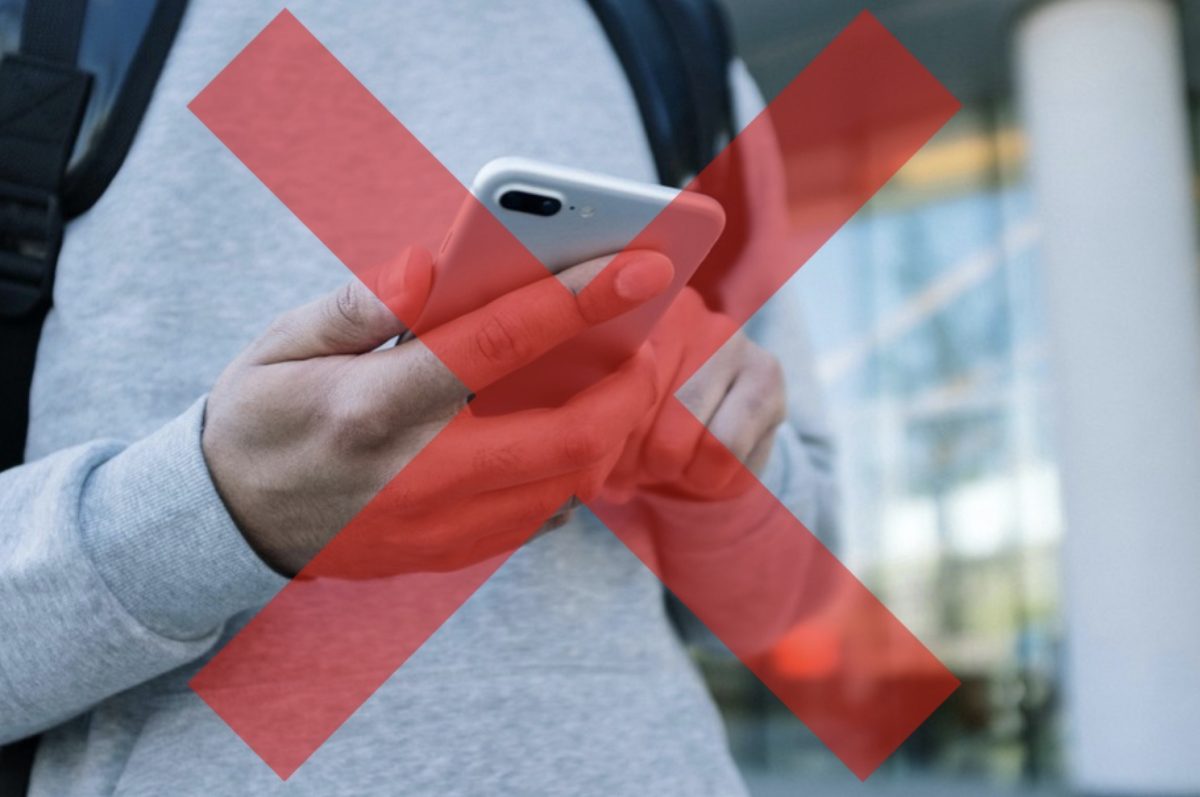
On March 19, 2026, Laura Kelly signed a bill that bans student cell phone use in schools across Kansas. The law requires schools to prohibit personal electronic devices during the school day, including phones, tablets, and headphones.
This new rule has created strong reactions from both staff and students at BHS.
Principal Brant Brittingham believes the ban will have a positive impact.
“I think it’s a positive thing,” Brittingham said. “Part of the reason we have the issues that we do is because of cell phones in kids’ lives.”
He compared phone use to sports, explaining how distractions affect performance and relationships.
“Do you take your phone out on the field? No. Because it’s a distraction,” he said. “We’re trying to build meaningful, authentic relationships that don’t involve technology.”
Brittingham also addressed concerns about communication with parents.
“When your parents were in school, they didn’t have cell phones.” He said “If they needed something, they called the office.”
However, he admitted the law could create challenges, especially for certain classes.
“It’s certainly going to affect journalism and media classes,” he said. “I don’t have a good answer yet on how that might play out.”
Assistant principal Kelli Haeffner also supports the idea of limiting distractions.
“As a parent, I am for limiting distractions in the classroom,” Haeffner said. “I love the idea of students building more face to face connections.”
She explained that BHS already has rules in place, but the biggest change will be stricter enforcement throughout the entire day.
“The biggest change is bell to bell,” she said. “Currently, students can use their phones during passing periods and lunch. Change is hard.”
Haeffner said the school has already started adjusting how staff communicate with students.
“We’ve encouraged coaches and sponsors to use specific tools instead of social media,” she said. “This helps us stay in compliance.”
While staff members see benefits, many students disagree with the new rule.
Freshman Jay Bieberdorf feels the ban is unnecessary.
“I don’t think they needed to do it,” he said. “Our rules are already pretty enforced.”
He also raised concerns about privacy and communication.
“If we need to text our parents about something private, the office doesn’t need to know what we’re talking about,” Bieberdorf said.
Other students believe the rule could actually make behavior worse.
“I think it’s going to make kids more rebellious,” said Kailen Hull. “They’re just going to go to the bathrooms and use their phones and get in more trouble.”
Charlie Crites agreed, saying students may try to get around the rules.
“It’s not a good idea,” she said. “Kids are just going to sneak around with their phones and cause more trouble.”
Some students also think schools should have been allowed to decide their own rules instead of a statewide ban.
“I think each school should get to make up their own rules,” Crites said.
Even with the disagreement, students understand that the change will be difficult, especially for schools that did not already have strict policies.
“Going from using your phone all day to not at all is a big change,” Bieberdorf said.
As the new law gets closer to being fully enforced, BHS will have to adjust along with the rest of the state. While staff members believe the ban will improve focus and relationships, many students remain unsure about how it will affect their daily lives.